Find 5 Layers Chickpea Seed Cleaner for Wheat, Rice, and Sunflower
Source 30 models of 5 Layers Chickpea Seed Cleaner designed for cleaning and grading grains like wheat, rice, and sunflower seeds. Buyers can compare capacities ranging from 5 to 20 tons per hour, power ratings, and customization options to find the right equipment for their processing needs.
Key considerations
Products List


Helida 5-Xfz-15s Combined Chickpea Seed Cleaner Seed Cleaning Machine
$3400.00 - $8900.00
MOQ: 1 Pieces


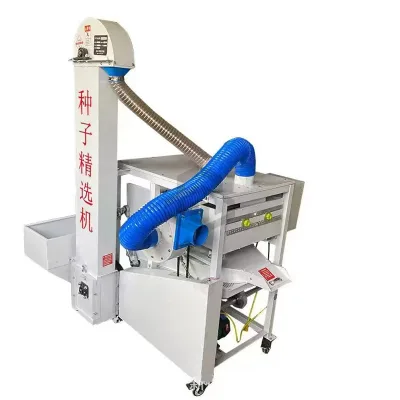


Comprehensive Sourcing Guide
Strategic Sourcing Guide for 5-Layer Chickpea Seed Cleaners
Procuring a 5-layer chickpea seed cleaner requires a nuanced understanding of agricultural machinery specifications, as the term "5 layers" often refers to the specific sieve configuration designed to separate chickpeas from impurities, foreign seeds, and varying grain sizes. While the market offers various configurations, the specific requirement for a five-layer system implies a need for high-precision grading and cleaning capabilities. This guide synthesizes available product data and industry standards to assist buyers in evaluating potential suppliers and machinery configurations without relying on unverified claims. The focus remains on observable attributes, technical realities, and compliance frameworks derived from the current market landscape.
Technical Specifications and Configuration Analysis
When evaluating a 5-layer chickpea seed cleaner, the primary technical differentiator is the sieve arrangement and the capacity to handle specific crop densities. Chickpeas, being larger and denser than many other pulses, require a robust cleaning mechanism. The available market data indicates that machines in this category often feature capacities ranging from 5 tons per hour to 20 tons per hour, depending on the model and layer configuration. For instance, specific models observed in the market, such as the 5X-5, operate at a capacity of 5 tons per hour, while larger industrial units like the 5XZS-10DS or 5XZC-7.5DS offer capacities of 10t/H and 7.5t/H respectively.
The physical dimensions of these machines are substantial, reflecting the need for multiple sieves and dust separation systems. Observed dimensions for similar cleaning units range from approximately 3920mm in length to over 6500mm for larger configurations. A typical footprint might be around 650022003600mm, while more compact models may measure 3920x2430x3440mm. Buyers must verify that the physical space available in their facility can accommodate these dimensions. Furthermore, the weight of these units is a critical logistical factor, with observed weights ranging from 1770kg to 2900kg. This weight variance often correlates with the robustness of the frame and the inclusion of heavy-duty components like cyclone dust separators.
Power consumption is another vital specification. The machinery typically operates with power ratings between 9.9kw and 15.75kw for standard cleaning units, while larger systems may require higher inputs. Voltage requirements are equally critical, as the global market for agricultural machinery often supports a wide range of electrical standards. Observed voltage specifications span from 110V to 680V, with frequency options of 50Hz and 60Hz. This flexibility is essential for buyers operating in regions with varying grid standards. The inclusion of a cyclone dust separator is a common feature, noted in product remarks as an "Install Cyclone" option, which is crucial for maintaining air quality and preventing grain loss during the cleaning process.
Compliance, Certification, and Quality Standards
In the B2B agricultural machinery sector, compliance with international quality standards is non-negotiable for ensuring long-term reliability and safety. The market data indicates that reputable manufacturers typically adhere to ISO9001 certification, which serves as a baseline for quality management systems. Specific product listings frequently cite compliance with ISO9001, ISO9001-2008, TUV, SGS, and CE standards. Additionally, for markets in Africa and specific export zones, certifications such as SONCAP (Sonar Certification of Conformity) are often required.
Buyers should verify that the supplier provides valid certificates for these standards rather than relying on general claims. The presence of TUV and SGS certifications suggests that the machinery has undergone third-party testing for safety and performance. However, it is important to note that while these standards are frequently listed, the specific scope of the certification (e.g., whether it covers the entire production line or just the final assembly) must be confirmed with the supplier. The "High" quality attribute often associated with these machines is a subjective observation that should be backed by tangible test results or warranty terms.
The "One Year" guarantee mentioned in product attributes is a standard offering, but buyers must scrutinize the terms of this guarantee. Does it cover the entire machine, or only specific components like the motor or sieves? Furthermore, the "High" quality designation should be cross-referenced with the material specifications. The machines are often described as having a "Green White" or "White" color scheme, which is primarily aesthetic but can indicate the type of paint or coating used for corrosion resistance in agricultural environments.
Cost Drivers and Pricing Dynamics
The pricing of a 5-layer chickpea seed cleaner is influenced by several variables, including capacity, power rating, and the inclusion of advanced features like cyclone dust separators. The observed price range in the market spans from $475 to $30,000. This wide disparity suggests that the lower end of the spectrum may represent smaller, less automated units or those with limited customization, while the higher end likely corresponds to high-capacity, fully automated systems with advanced dust control and multiple layer configurations.
Capacity is a primary cost driver. A machine rated at 5 tons per hour will generally be less expensive than one rated at 20 tons per hour. The power consumption also impacts the cost; units with higher wattage ratings (e.g., 15.75kw vs. 9.9kw) often command a premium due to the larger motors and more robust electrical components required. Additionally, the complexity of the sieve system plays a role. A 5-layer system requires more precise engineering and more sieves than a 3-layer system, which can increase manufacturing costs.
Customization is another factor that can influence the final price. The market data confirms that customization is available, allowing buyers to tailor the machine to specific crop requirements. This might include changing the sieve sizes, adjusting the voltage, or modifying the color scheme. However, customization often incurs additional costs and may extend the lead time. Buyers should request a detailed breakdown of costs associated with any custom features to avoid unexpected price escalations.
Typical Applications and Crop Versatility
While the core keyword focuses on chickpea seed cleaning, the machinery is often designed to be versatile, capable of handling a wide range of crops. The observed applications for these cleaning units include wheat, beans, rice, sesame, pulses, sunflower seeds, and maize. This versatility is a significant advantage for buyers who may need to process different crops throughout the year. The "Grain and Seed Cleaning and Grading" function is a standard capability, ensuring that the machine can separate clean grain from impurities effectively.
The specific requirement for a 5-layer system is particularly beneficial for crops like chickpeas, which have a wide size distribution and require multiple stages of separation to achieve high purity. The "Changeable" sieves mentioned in the product attributes allow for quick adjustments to accommodate different crop sizes. This flexibility is crucial for maintaining efficiency when switching between crops. The "Maize Threshing, Cleaning, Grading" function indicates that some models may also include threshing capabilities, although this is distinct from the cleaning process and should be verified based on the specific model requirements.
The "Clean Grain" function is the primary objective of these machines, ensuring that the final product meets market standards for purity and quality. The inclusion of a cyclone dust separator further enhances the cleaning process by removing fine dust and chaff, which can otherwise contaminate the grain and reduce its market value. Buyers should ensure that the machine's design specifically addresses the dust removal needs of their specific crop, as this can significantly impact the final product quality.
Supplier Evaluation and Operational Logistics
Evaluating a supplier for a 5-layer chickpea seed cleaner requires a thorough assessment of their production capabilities and logistical support. The market data indicates that many suppliers are located in Hebei, China, with some factories situated in Shijiazhuang City, near Beijing City. This concentration of manufacturing hubs suggests a mature supply chain with access to raw materials and skilled labor. However, buyers should verify the specific factory location and production capacity to ensure the supplier can meet their volume requirements.
Lead time is a critical logistical factor. The observed delivery time is typically "10 Days After Receive Your Payment," which is relatively short but may vary depending on the level of customization and the current order backlog. Buyers should confirm the lead time in writing and understand the factors that could delay delivery, such as customs clearance or shipping delays. The packaging is another important consideration, with options including "Wooden Case or Container" and "Export Standard Wooden Boxes." Proper packaging is essential to prevent damage during transit, especially for heavy machinery weighing up to 2900kg.
The "High" quality attribute and "One Year" guarantee are standard claims, but buyers should request references or case studies to validate these assertions. Contacting previous customers who have purchased similar machines can provide valuable insights into the supplier's reliability and after-sales support. Additionally, the availability of spare parts and technical support should be confirmed, as downtime can be costly in agricultural operations.
Long-Term Procurement Considerations
When procuring a 5-layer chickpea seed cleaner, buyers must consider the long-term operational costs and maintenance requirements. The "One Year" guarantee provides a safety net for initial defects, but buyers should plan for ongoing maintenance beyond this period. The "Changeable" sieves and the "Cyclone Dust Separator" are components that may require regular replacement or cleaning. Understanding the availability and cost of these spare parts is essential for maintaining machine efficiency over time.
The "Discount" attribute mentioned in the market data suggests that there may be opportunities for cost savings, particularly for bulk purchases or long-term contracts. Buyers should negotiate pricing based on volume and delivery terms to maximize their return on investment. Additionally, the "Alternative System" option, such as the cyclone system, should be evaluated for its long-term impact on energy consumption and maintenance costs.
Finally, buyers should consider the scalability of their operations. If the current 5-layer system meets immediate needs, the supplier should be able to provide upgrades or additional units as the business grows. The "High" capacity options, such as the 20 Tons Per Hour models, indicate that the market offers solutions for large-scale operations. By carefully evaluating the technical specifications, compliance standards, and supplier capabilities, buyers can make informed decisions that ensure the long-term success of their chickpea seed cleaning operations.
FAQs
What capacity options exist for 5 layers chickpea seed cleaners?
Available capacities range from 5 tons per hour to 20 tons per hour depending on the specific model. Smaller units like the 5X-5 handle 5 tons, while larger industrial models can process up to 20 tons hourly.
Can these machines be customized for different crops?
Yes, customization is available to tailor the machine for specific crop requirements. Buyers can often adjust sieve sizes or voltage to accommodate crops like wheat, beans, rice, or maize effectively.
Which certifications do manufacturers typically hold for these units?
Reputable manufacturers typically hold ISO9001, TUV, and SGS certifications. Some listings also include CE and SONCAP standards to ensure compliance with international safety and quality requirements for export.
How long is the delivery lead time after payment?
The standard delivery time is 10 days after receiving payment. This timeframe applies to standard configurations, though complex customizations may require additional processing time from the factory.
What power and voltage specifications are supported?
Power ratings typically range from 9.9kw to 15.75kw for standard units. Voltage options span from 110V to 680V with frequency support for both 50Hz and 60Hz to match global grid standards.
Are cyclone dust separators included in the standard design?
Many models feature an installable cyclone dust separator to remove fine dust and chaff. This system is crucial for maintaining air quality and ensuring the final grain meets high purity standards.